
Need Help? Chat with us

Saturday - Wednesday: 9 AM - 10 PM
Thursday: 9 AM - 9 PM
Friday: Closed

November 13, 2026
What Causes Jaw Pain and When Should You See a Dentist?
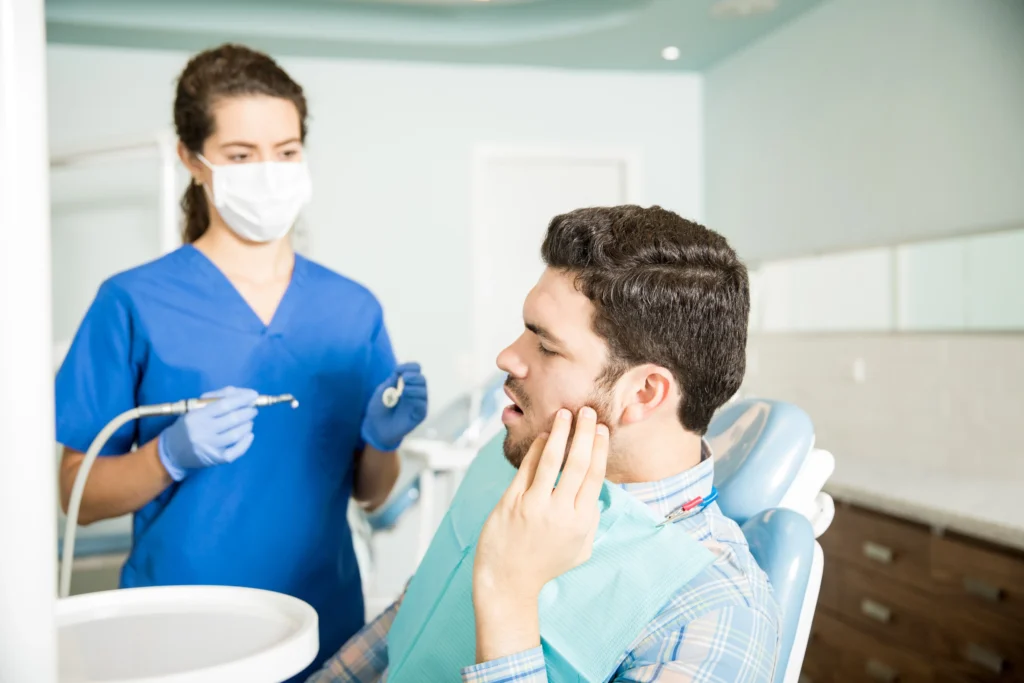
A dull ache near your ear when you bite into a sandwich. A sharp twinge when you open wide at the dentist. A jaw that feels tired after a long conversation. Many people notice these things and brush them off until eating or talking starts to feel uncomfortable. If that sounds familiar, you are not alone, and the causes of jaw pain are often easier to understand than they first seem.
Jaw pain can come from the teeth, the jaw joints, the muscles around them, or sometimes from a medical condition that has nothing to do with your mouth. What matters is the full picture: where it hurts, when it hurts, and what else is going on, such as swelling, clicking, headaches or fever. Some jaw pain settles within days, while other kinds need a dentist to take a proper look, and this blog will help you tell the difference.
What Are the Common Causes of Jaw Pain?
The causes of jaw pain rarely come down to one single source. Most cases trace back to the joint, the muscles, the teeth, or a mix of these.
Here is a closer look at each one.
Temporomandibular Joint Disorders (TMD)
According to the National Institute of Dental and Craniofacial Research (NIDCR), temporomandibular disorders are a group of more than 30 conditions that affect the jaw joint and the muscles that move the jaw. The joint sits just in front of each ear, and you can feel it move if you place your fingers there and open your mouth. Pain, stiffness, and a jaw that locks or moves less freely are the usual signs. Clicking on its own, without pain, is common and does not normally need treatment.
Dental Problems and Infections
A cavity that has reached the nerve, a cracked tooth, or an abscess can all send pain into the jaw. Dental pain is not always easy to pinpoint, so a sore tooth can feel as if it is coming from the jaw or even the ear. Wisdom teeth that are only partly through the gum can also cause aching at the back of the jaw. Throbbing pain, sensitivity to hot or cold, or swelling are good reasons to have a tooth checked.
Teeth Grinding and Jaw Clenching (Bruxism)
Clenching or grinding puts the jaw muscles to work for hours, often while you sleep. Many people only find out when they wake with a tight jaw or a dull headache, or when someone hears the grinding at night. A systematic review of studies from 1998 to 2008, indexed on PubMed, found that studies relying on self-report or a clinical exam linked bruxism with TMD pain, while studies using more precise measurements found a much weaker link. So bruxism may add to jaw pain, but it is not the whole explanation for everyone.
Muscle Strain and Overuse
Jaw muscles can get sore from overuse, just like the muscles in your legs after a long walk. Chewing gum for hours, biting nails or pens, eating very tough food, or keeping your mouth open through a long appointment can all leave them aching. This kind of pain is often felt on both sides and tends to ease once the muscles get some rest.
Jaw Injuries and Arthritis
A fall, a sports knock or a blow to the face can bruise, sprain or even fracture the jaw. Arthritis can also affect the jaw joint, wearing down the smooth surfaces over time and causing stiffness, pain, and a grating feeling when the jaw moves. If you have hurt your jaw and cannot close your mouth properly, treat it as urgent.
Other Medical Conditions That Can Cause Jaw Pain
Sometimes the problem is not in the mouth at all. Ear infections, sinus infections, migraines, nerve-related pain such as trigeminal neuralgia, and salivary gland problems can all be felt in the jaw. Rarely, jaw pain that comes with chest pressure, shortness of breath, or pain spreading down the left arm can point to a heart problem and needs emergency care.
What Does Jaw Pain When Opening Your Mouth, Chewing or Yawning Mean?
The moment your jaw hurts can tell you a lot about what is going on. Dentists pay close attention to these patterns because each one points toward a different set of causes.
Let us look at each situation in turn.
Jaw Pain When Opening the Mouth
Jaw pain when opening the mouth wide often points to the joint or the muscles around it. It can happen with TMD, a strained jaw muscle, or after a long dental visit. An infection around a wisdom tooth can make opening painful too, usually with swelling. If the jaw catches, shifts to one side, or will not open fully, mention it to a dentist.
Jaw Pain When Chewing
Jaw pain when chewing usually means something that is already irritated is being put under load. That could be a sore joint, tired muscles, or a tooth that hurts when you bite down, such as one with a crack or deep decay. Sharp pain in one particular tooth tends to suggest a dental cause, while a broader ache near the ear points more towards the joint or muscles.
Jaw Pain When Yawning
Jaw pain when yawning is common because a yawn opens the jaw wider than almost any other movement. That stretch can irritate a sensitive joint or a strained muscle, and it may come with a click or a brief catch. An occasional twinge after a big yawn is not alarming. If it keeps happening, or the jaw ever gets stuck, it deserves an assessment.
When Should You See a Dentist for Jaw Pain?
Book a dental visit if jaw pain lasts more than a week or two, keeps coming back, or makes it hard to eat, speak or sleep. The same applies if your jaw locks, will not open fully, or clicks painfully, or if the pain comes with a toothache or swollen gums. Seek urgent care for facial swelling, fever, trouble swallowing or breathing, or pain after an injury. Jaw pain together with chest pressure or shortness of breath is an emergency, so call emergency services straight away.
How Do Dentists Diagnose the Cause of Jaw Pain?
A dentist will start by listening. Expect questions about where the pain sits, when it began, what makes it better or worse, and whether you have noticed clicking, grinding, headaches, or a recent injury. They will also ask about your general health, since conditions elsewhere in the body can show up in the jaw.
Next comes a physical check. The dentist will feel the jaw muscles and joints, watch how your mouth opens and closes, and examine your teeth and gums. An X-ray or other scan may be used when a tooth problem, fracture, or joint change is suspected. There is no single test that confirms every jaw problem, so the diagnosis usually comes from putting these findings together, and you may be referred to a physician if the cause seems to lie outside the mouth.
How Can You Relieve Jaw Pain at Home?
Mild jaw pain often settles with a few simple changes that let the jaw rest. These steps can ease discomfort, but they do not replace an assessment if the pain persists.
Here is what tends to help.
- Eat soft foods:
Choose foods that need less chewing for a few days, such as soups, eggs, yoghurt or well-cooked rice. Give the jaw time to settle before going back to tougher foods. - Avoid excessive jaw movement:
Limit wide yawning, singing, and long stretches of chewing while the jaw is sore. When a yawn is coming, resting your hand under your chin can keep the opening smaller.
- Apply warm or cold compresses:
Use a comfortable temperature, such as a warm damp towel or a wrapped ice pack, for about 10 minutes at a time. Cold often suits a recent injury, while warmth can help tight muscles relax. - Reduce clenching:
Notice whether your teeth are touching during the day, because with your lips closed they should normally stay slightly apart. Letting the jaw drop and relax each time you catch yourself clenching can lower the strain. - Avoid chewing gum:
Gum keeps the jaw muscles working for long periods with no real benefit. Pausing it, along with nail biting and chewing on pens, gives the muscles a proper break.
Conclusion
Jaw pain has many possible sources, and the timing, the side and any other symptoms usually tell you where to look. Mild pain with a clear trigger, like a tough meal or a big yawn, often eases with rest. Pain that lingers, returns, or arrives with swelling, locking or tooth symptoms is worth having examined, because the causes of jaw pain differ and so does the right next step.
If you are unsure which group yours falls into, the team at Diamond Dentals in Kuwait can examine your jaw, teeth, and bite, explain what is behind the pain, and suggest treatment only if it is needed. Bringing a few notes on when the pain happens and what eases it will make the visit more useful.
FAQs
- Can jaw pain go away on its own?
Yes, mild pain from muscle strain or a short flare of TMD often settles with rest and soft foods. If it lasts more than a couple of weeks or keeps returning, have it checked. - Why does my jaw hurt on only one side?
One-sided pain can come from a problem tooth, a jaw joint, or the habit of chewing mostly on one side. A dentist can tell which by examining both your teeth and your joints. - Can stress cause jaw pain?
Stress can make you clench or grind without noticing, which tires the jaw muscles. Relaxation habits and a check for clenching can help. - Does jaw clicking always mean I have TMJ problems?
No, clicking without pain or limited movement is common and usually needs no treatment. Get it checked if it comes with pain, locking or trouble opening. - Can a dental infection cause jaw pain?
Yes, an infected tooth or gum can cause throbbing pain that spreads into the jaw, sometimes with swelling or fever. It needs prompt dental assessment rather than waiting it out. - Which doctor should I see for jaw pain?
Start with a dentist, who can check your teeth and jaw joints and refer you if needed. An ENT doctor, neurologist or physician may be involved if the cause seems to be outside the mouth.
Search
Recent Posts
-

What Causes a Cracked Tooth and How Is It Repaired?
13, Nov, 2026
-

How to Stop Toothache Pain and When to See a Dentist
13, Nov, 2026
-

How Long Does a Root Canal Take?
13, Nov, 2026
-

What Causes Jaw Pain and When Should You See a Dentist?
13, Nov, 2026
-

Looking for professionals & trusted medical healthcare?
Don't hesitate to contact us.

Contact Us
Get In Touch With Us




HyperText Markup Language (HTML) is the standard markup language for creating web pages and web applications.
© 2024 All Right Reserved